Walleye Now
- 3.7
- Rating
- 10.00K
- Installs
- Free
- Price

 Analysis by App-foxy
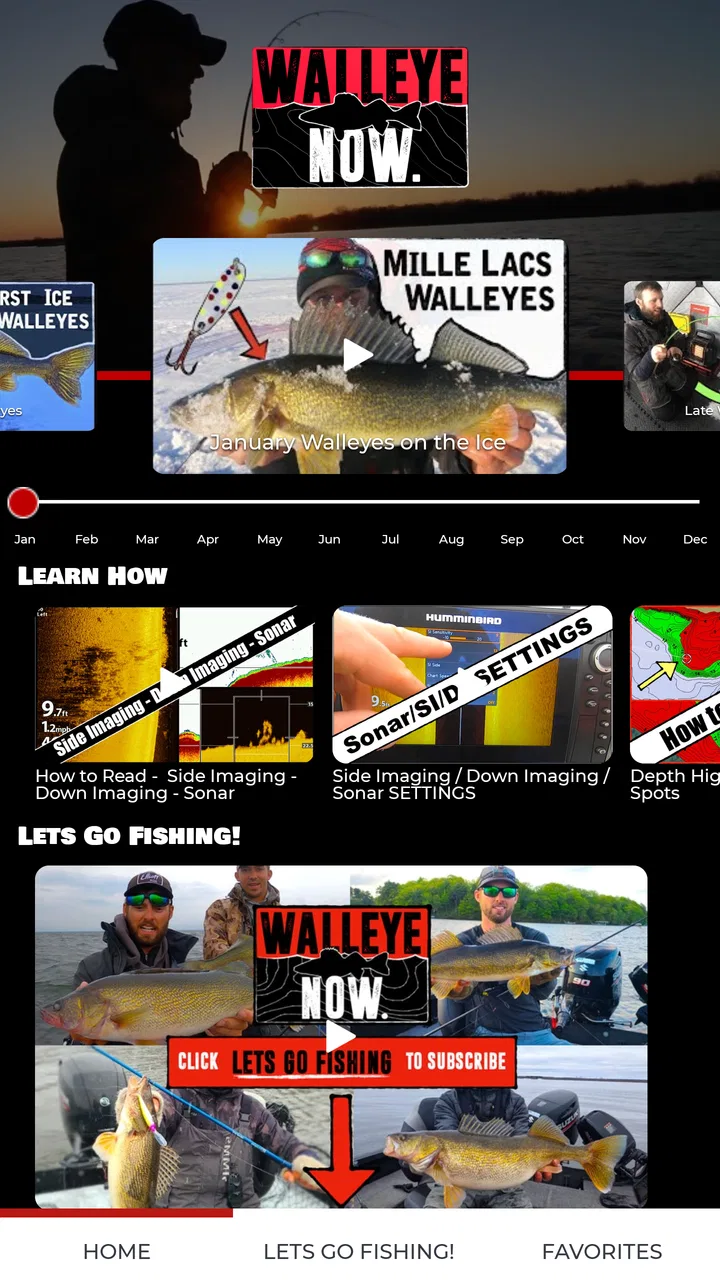
I downloaded Walleye Now expecting a focused fishing companion rather than a broad outdoor app, and that is exactly how it feels. It is a sports app from Walleye Now built around helping anglers pursue walleye throughout the year, whether they fish a familiar local lake or keep moving between different bodies of water. The idea is simple, but the usefulness depends on whether you actually target this species often enough to return to the app after the first burst of curiosity.
My first impression was that this is not trying to replace every tool an angler might carry. It has a narrower identity, and that is a strength when your trips are specifically about walleye. Instead of treating fishing as one large subject, it points its attention toward the decisions that matter to a walleye angler: when to go, what kind of situation to look for, and how to turn seasonal knowledge into a repeatable routine.
What makes the first week appealing
The first week is where the app makes its best case. A new user can approach it with a clear question—how should I prepare for my next walleye trip?—rather than needing to learn a complicated general-purpose fishing platform. That focused purpose makes it easier to judge whether the content fits your habits. If walleye is your main target, the app feels more relevant than a general fishing reference filled with information you may never use.
You May Also Like

 AccuWeather: Weather Radar
AccuWeather Review: A Quick, Clear Forecast for Everyday Decisions
For everyday plans, the best forecast is the one you can understand quickly. AccuWeather makes rain timing, radar, and local conditions easy to act on, with a few trade-offs.

 Hill Climb Racing
Why Hill Climb Racing Still Turns Crashes Into One More Run
A tiny car, a bumpy hill and one more upgrade: Hill Climb Racing keeps resurfacing because its simple chaos makes every near-miss feel personal.

 AliExpress - Shopping App
AliExpress Makes Global Shopping Feel Personal, but Shoppers Bear the Risk
AliExpress turns a global marketplace into a pocket-sized discovery engine. Its reach is useful, its shopping loop compelling, and its trade-offs easy to miss.

 Lords Mobile: Kingdom Wars
Lords Mobile Is a Kingdom-Building Routine, Not a Quick Match
A case-by-case verdict on the building, battles, device demands, and social commitments that make Lords Mobile rewarding for some players and exhausting for others.

 PDF Scanner app - TapScanner
TapScanner Makes Paperwork Easier to Capture, Check, and Share
TapScanner makes scanning with a phone feel less like a rescue operation and more like a dependable step in getting work done. Its capture tools are useful, though not flawless.

 Block Blast!
 Shows How Much a Puzzle Game Can Leave Out
A quiet grid game shows why puzzle players increasingly value instant clarity, repeatable skill and low-pressure play—and where the genre still needs to catch up.
More From Our News Desk
View All News


I found the year-round angle especially important. Walleye fishing changes with conditions and season, so a resource that remains useful beyond one short period has a better chance of becoming part of a regular routine. The app’s central promise is not tied to one lake or one annual event; it is designed around pursuing walleye at different times of year and on different waters. That gives the first sessions a practical direction instead of making the app feel like a one-time novelty.
A good way to test it is to use it before a real outing, not while standing at the boat ramp. I would open it the evening before, decide what I already know about the lake, and use the app to organize the questions I still need to answer. That small change matters. Fishing information is easier to apply when it becomes part of preparation, rather than something you hurriedly browse after the day has already gone badly.
For a newer angler, the focused subject can also reduce the feeling of being overwhelmed. There is a difference between reading endless fishing advice and working through information connected to one target species. I would not assume that the app can replace experience on the water, but it can help give a beginner a more deliberate starting point. The value is strongest when the user takes notes mentally or on paper and then checks those ideas against actual conditions.
One useful habit is to separate information from expectation. The app may help you think about walleye behavior and seasonal planning, but no reference can guarantee a catch on a particular morning. I would use it to form a plan with alternatives: one approach if the fish are active, another if the first location or presentation produces nothing. That makes the app more valuable than treating it as a promise of instant success.
The app is free to install, which makes this trial period easy to justify. Its content rating is Everyone, so it is presented as suitable for a broad audience rather than a restricted adult product. The free entry point is helpful for anglers who want to see whether a specialized walleye resource fits their style before committing money or replacing tools they already trust.
How I would use it before a normal fishing day
Imagine a weekend trip to a lake you have visited before. You have limited time, the weather has changed since your last visit, and you do not want to spend the first hours drifting without a plan. I would use Walleye Now as a preparation prompt: review the seasonal context, identify the type of walleye situation I want to test first, and decide in advance how long I will give that plan before switching tactics.
That workflow is more realistic than expecting an app to make every decision for you. The strongest benefit is not a magic answer; it is reducing aimless experimentation. When the first plan fails, I would record what happened rather than simply blaming the app. Was the water different? Did the timing change? Did I stay with one approach too long? Returning to those questions is how a specialized resource can slowly become useful personal knowledge.
There is also a practical trade-off here. If you fish casually only a few times a year, a dedicated walleye app may feel more specialized than necessary. A general fishing app, a trusted local source, or advice from experienced anglers may cover more species and broader trip planning. Walleye Now makes more sense when the target species is central to your outings and you appreciate having a resource built around that specific goal.
Why the value has to survive beyond the first month
After the novelty fades, the important question is whether I have a reason to open the app again. Specialized sports apps often feel useful during the first few sessions because their subject is fresh, then become forgotten once the user has read the obvious material. Walleye Now has a better chance of lasting when I treat it as part of a seasonal cycle rather than a guide I finish in one sitting.
The recurring value comes from returning with a new fishing problem. Early-season planning, changing water conditions, a different lake, or a disappointing recent trip can each give the app a new role. I would not browse it randomly every day. Instead, I would use it at natural points: before a trip, after a trip that taught me something, and when the season changes enough to make my previous assumptions less useful.
That approach also protects the app from becoming background noise. If I open the same material repeatedly without connecting it to a real outing, the experience quickly loses impact. The better method is to choose one idea, apply it, and judge the result. This turns the app into a planning companion rather than a passive library.
For anglers who fish several times across the year, the broad seasonal purpose is more meaningful than a one-off checklist. Walleye behavior and fishing conditions are not static, so a resource that encourages year-round thinking can remain relevant as the calendar moves forward. Still, the lasting value depends on the quality and freshness of what you find when you return. A specialized app must earn repeat visits by helping with different situations, not merely repeating its central message.
The current version is 4.2.5, and the app has passed the early stage of being a brand-new release. That matters to me because a mature version is generally more reassuring than an untouched first build, although version numbers alone do not determine whether the content will suit every angler. The developer, Walleye Now, has kept the product centered on its fishing niche instead of turning it into an unrelated social or entertainment app.
Its audience size also suggests a focused product rather than a huge mainstream platform. The app has more than ten thousand installs, with a 3.7 average from 74 ratings and 41 written reviews. I read that as a reason to approach it with realistic expectations: there is enough adoption to show that anglers are trying it, but not enough to assume it will match the polish, depth, or community activity of the biggest outdoor services.
The rating is neither a warning to avoid it nor proof that it will work for everyone. For me, it signals a product with a clear audience and possible rough edges. I would pay more attention to how well its approach matches my fishing style than to the number alone. A walleye specialist can be worthwhile for a committed angler even if a broader app has a stronger overall reputation.
Where it fits beside ordinary alternatives
The usual alternative is a general fishing app that covers many species, locations, weather factors, maps, reports, or social features in one place. That kind of tool is better if I want an all-purpose trip planner or regularly switch between walleye, bass, trout, and other targets. It may also be more convenient for someone who wants one app for every outdoor outing.
Walleye Now has a different advantage: concentration. I would choose it over a general alternative when I want walleye-specific thinking rather than a wide collection of loosely related tools. The trade-off is that it should not be expected to replace every service involved in a fishing trip. If navigation, live conditions, location reports, or broad record keeping are essential to my routine, I would still keep the appropriate tools alongside it.
This is one of the app’s most important long-term realities. It is easier to keep an app installed when it fills a distinct role. If I already have a trusted general fishing setup and Walleye Now merely repeats information I never act on, it will probably disappear from my regular rotation. If it helps me prepare specifically for walleye and think more clearly about changing conditions, the narrower scope becomes a reason to keep it.
The maintenance burden of keeping it useful
The app itself may be easy to install, but maintaining its value requires effort from the user. I would not rely on it as a substitute for building my own record of lakes, timing, weather, water clarity, successful patterns, and failed experiments. Those personal observations are what make advice useful in a particular place. The app can support that process, but the angler still has to connect general guidance with local reality.
My recommended routine would be deliberately light. Before a trip, I would spend a short session reviewing the relevant material and choosing a first plan. Afterward, I would write down one result and one uncertainty. That is enough to create continuity without turning fishing into an administrative project. If the app encourages me to think this way, it earns recurring space even when I do not open it every week.
There is a hidden trade-off in specialized guidance: the more confident the advice sounds, the more important it is to test it against the water in front of me. Conditions can change faster than a general recommendation can account for them. I would treat the app as a framework, not an authority that overrides observation. Watch what is happening, adapt when necessary, and use the app to improve the next decision rather than defend the previous one.
Another maintenance question is financial. The app is free, but it includes in-app purchases ranging from $5.99 to $59.99 per item. That makes it important to decide what level of use I actually need before spending. A casual user should first establish whether the free experience fits into a real fishing routine. A committed angler may consider paid material more reasonable if it provides enough additional value, but I would judge that against the cost of existing guides, reports, equipment, and other fishing services rather than in isolation.
I also would not pay simply because the app is specialized. Specialization is useful only when it changes what I do on the water. If a purchase gives me information I can repeatedly apply across trips, it may support a lasting habit. If it only produces a short burst of reading and no change in preparation, the cheaper choice is to keep using the free portion or skip the app entirely.
Small habits that prevent the app from becoming clutter
The first habit is to open it with a question. “How do I fish better?” is too broad to guide a useful session. “What should I reconsider before this seasonal trip?” is more practical. A narrow question helps me notice whether the app is actually contributing something or merely filling time.
The second is to compare advice with results without demanding perfect agreement. If a recommendation does not work, that does not automatically make it useless. It may have been applied under different conditions, or I may have misunderstood the situation. I would record the mismatch and use it to refine future decisions. This is a more durable workflow than treating every unsuccessful outing as proof for or against the app.
The third is to use it as a shared planning tool with a fishing partner. Before leaving, we could agree on a first approach and a backup plan instead of arguing on the water about what to try next. That is a realistic use case for a focused sports app: it helps turn vague confidence into a conversation about choices. The app does not need to control the trip to improve it.
These habits also reveal who should skip the product. If I want a live social network, extensive location services, or a complete replacement for every fishing utility, this is probably not the right single app. If I rarely target walleye, the narrow focus may not justify another icon on my phone. And if I prefer learning only through personal experimentation, I may find a dedicated guide less useful than time on the water.
What could cause fatigue over time
The biggest risk is repetition. A focused app has a limited subject by design, and that can become tiring if the material does not offer enough depth for different seasons, waters, and experience levels. I enjoyed the clarity of having one target species in view, but I would eventually stop opening the app if every visit felt like the same introductory lesson.
Another source of fatigue is the gap between general advice and local conditions. Anglers often want answers that account for one particular lake, one changing weather pattern, or one difficult day. A specialized identity can raise expectations that the app will be highly specific to the user’s situation. When it cannot replace local knowledge, some users may feel that they are still doing all the important interpretation themselves.
The purchase structure may also affect patience. A free app is easy to try, but paid items can make the experience feel divided if the most useful material is placed behind purchases. I would want to understand the value of each item before buying and avoid treating the full range of paid options as mandatory. The presence of purchases does not make the app poor, but it does make the decision to keep using it more deliberate.
The moderate average rating reinforces that balanced view. Some anglers will appreciate the narrow purpose, while others may expect a broader or more polished fishing platform. I would not install it expecting a universal solution. I would install it because I specifically want a walleye-centered resource and am willing to judge its usefulness through actual trips.
There is also the simple problem of attention. Fishing apps compete with weather tools, maps, messages, equipment notes, and personal routines. If Walleye Now does not fit naturally into preparation, it will be forgotten regardless of how relevant its subject is. The best way to avoid that is to give it a defined job: use it before targeted walleye trips, then close it and fish.
Who gets the most from it
I see the strongest fit for anglers who already know that walleye is the species they want to pursue and who fish often enough to benefit from seasonal thinking. It can also suit someone moving from casual fishing toward a more intentional approach, especially if they want a focused resource without starting with a massive general platform.
It is less convincing for a person who fishes many species equally, wants detailed location-based planning in one place, or expects immediate catch results. Those users may be happier with a broader fishing service, local reports, or a combination of tools that covers navigation and conditions as well as technique. Walleye Now should complement those choices rather than be judged as though it were designed to replace them.
For families or younger anglers, the Everyone rating makes the app easier to consider in a shared household, but the real question remains interest. A broad age rating does not make a specialized fishing subject engaging for someone who does not care about walleye. I would recommend it based on the angler’s target and routine, not simply because it is accessible.
My long-term verdict
After the first-week appeal wears off, Walleye Now earns space on my phone only if I use it as a recurring planning aid rather than a one-time information download. Its strongest quality is its clear commitment to walleye fishing across seasons and bodies of water. That focus can make it more useful than a general alternative when my trips have one consistent target.
I like the fact that the app invites a repeatable process: prepare before going, choose a plan, observe what happens, and return with a better question next time. That is where its lasting value lies. It will not remove uncertainty from fishing, and I would not expect it to replace local knowledge, weather awareness, maps, or personal records. Its role is narrower but still worthwhile when that role is clearly defined.
The limitations are equally clear. The moderate rating suggests uneven experiences, the specialized subject will not suit everyone, and the in-app purchases mean that committed users should evaluate added content carefully. An angler who wants one complete fishing platform may find a broader alternative more convenient. Someone who targets walleye regularly, however, has a sensible reason to try this focused option before deciding.
My recommendation is to install it for a real upcoming trip, not merely out of curiosity. Use the free entry point to build a practical pre-trip routine, test one idea on the water, and see whether the app changes how you prepare. If it becomes part of that cycle, it has lasting value. If it remains a collection of advice you browse without applying, uninstalling it would be reasonable.
Overall, I would recommend Walleye Now to the dedicated walleye angler who wants a specialized sports companion and is comfortable combining it with other fishing tools. It does not need to be the only app on your phone to be useful. It simply needs to make your next walleye decision more deliberate—and, in my experience, that is a realistic standard this app can meet when you return to it with a purpose.
FAQs for Walleye Now
01What is Walleye Now, and who is it designed for?
Walleye Now is a fishing-focused app created for anglers interested in walleye fishing. It can be useful for beginners who want to understand the basics as well as experienced fishermen looking for practical guidance, seasonal information, and techniques. Before downloading, users should check the current app description to confirm which regions, devices, and fishing resources are supported.
02What kind of fishing information does Walleye Now provide?
The app is intended to help users improve their approach to walleye fishing through educational content and practical advice. Depending on the available version, this may include information about locations, seasonal behavior, equipment, presentations, and fishing strategies. It should be viewed as a helpful reference rather than a guarantee of success, since weather, water conditions, local regulations, and fish activity can change quickly.
03Does Walleye Now require an internet connection?
Some features may require an active internet connection, particularly content that is updated online, location-based information, account services, videos, or other media. Users should not assume that every resource works offline. If you plan to use the app while traveling or fishing in areas with weak reception, open the important content beforehand and verify whether the version available on your Android or iOS device supports offline access.
04Is Walleye Now free to download and use?
The download price and available features can vary depending on the platform, region, and version of Walleye Now. Some functions may be free, while additional content or tools could require in-app purchases, a subscription, or another payment. It is worth reviewing the store listing carefully before installing, including recurring billing details, trial conditions, and whether removing advertisements or unlocking premium material costs extra.
05Can Walleye Now replace local fishing knowledge or official regulations?
No. Walleye Now can serve as a convenient educational companion, but it should not replace local knowledge, current weather information, navigation tools, or official fishing regulations. Bag limits, seasons, size restrictions, licensing requirements, and protected areas differ by location and may change. Always confirm the rules with the relevant wildlife or fisheries authority before heading onto the water.
Pros
- Quick access to local walleye fishing reports and updates
- Useful for planning trips around current conditions
- Helps anglers discover productive nearby waters
- Simple format makes information easy to scan
- Convenient reference for both casual and experienced anglers
Cons
- Coverage may be limited outside supported fishing regions
- Report freshness depends on contributors and local updates
- Some information may require an internet connection
- Fishing advice can vary in accuracy between locations
- May offer limited value during closed or off-season periods

Walleye Now
Gallery